


Marketing automation can save time, organize your marketing activities, and help your business grow. But it works best when it is not just a set of random automated actions launched without a clear direction. Automating a few tasks may give you a quick sense of progress, but without a strategy, it is difficult to achieve consistent and measurable results.
That is why a solid marketing automation plan should come before a company starts building specific workflows, campaigns, or automated scenarios. This is the stage where you define your goals, understand your marketing funnel, choose the right KPIs, and decide who is responsible for each part of the process. As a result, automation does not operate separately from the business. It supports specific outcomes.
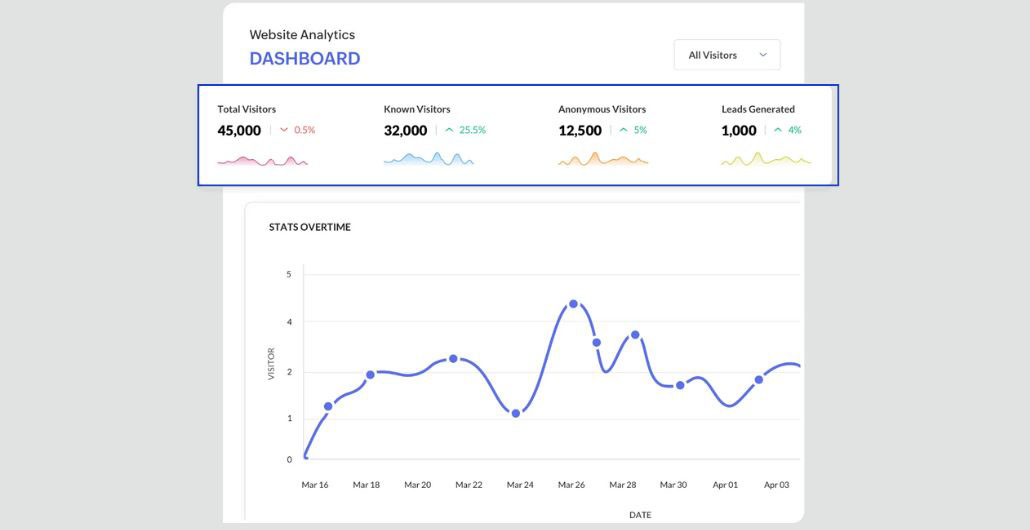
Why is a marketing automation plan so important?
Marketing automation without a plan can quickly become messy. A company may launch individual campaigns, send automated emails, collect contacts, and build workflows, but still not know which of those activities actually influence sales, engagement, or database growth.
A well-prepared marketing automation plan helps you look at the entire process from a broader perspective. The goal is not simply to have something “sent automatically.” The point is to make sure every automation has a clear purpose, a defined place in the marketing funnel, and a measurable impact on business performance.
At first, building such a plan may seem time-consuming. In practice, it saves time in the long run because the team knows what it is doing, why it is doing it, and how success will be measured.
Start with measurable goals
The first step is to define your goals. This is where many companies make the mistake of staying too general. Goals like “we want to be more recognizable” or “we want to go viral” may sound appealing, but they are too broad to become the foundation of an effective strategy.
A good goal needs to be specific and measurable. If a company wants to increase brand awareness, it should define what that means in practical terms. It could mean increasing website traffic, growing the number of social media followers, or expanding the email contact database.
Only then can you decide how much those numbers should increase, which metric will be used to track progress, and what timeframe you want to work within. This gives the team a clear reference point and makes it possible to evaluate whether marketing automation is actually working.
How does marketing automation support business goals?
Once the goals are clear, you can decide how to use marketing automation to achieve them. For example, if the main business goal is to get more people to use your product or service, one of the immediate marketing goals may be to grow your email contact list.
Email marketing is one of the key areas of marketing automation because it helps move people through the next stages of the sales funnel. A simple mechanism could involve offering a useful downloadable resource in exchange for an email address. For example, a bicycle repair shop could prepare a short guide on how to take better care of a bike between regular services. At first, this may seem counterintuitive, because better maintenance could mean fewer repairs. In reality, useful content builds trust in the brand and makes people more willing to share their contact details.
Automation can then deliver the guide by email and add the contact to the subscriber list at the same time. It is a simple example, but it shows the core principle well: automation should support a real goal and help move the recipient further through the process.

Understand your marketing funnel
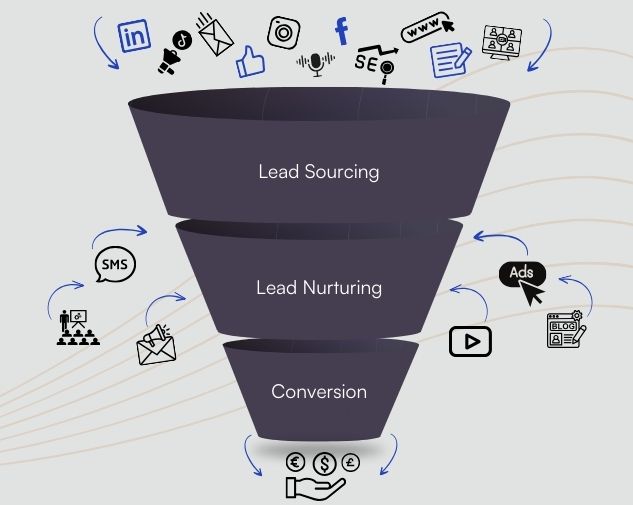
For a marketing automation plan to work, you need to understand your own marketing funnel. The funnel shows the journey a person takes from not being a customer to making a purchase.
Looking at this journey from above helps you see where potential customers are dropping off. Only then can you create goals and automations that solve specific problems in the process.
Before analyzing the funnel, it is worth preparing customer personas. They help you understand who your customers are, what they need, and how you can communicate with them at different stages of the buying decision.
A typical marketing funnel may include several stages. The first one is awareness, which is the moment when a person learns about your product or service. They may discover your brand through an ad, a recommendation, social media, or another source. At this stage, they do not necessarily know yet whether your offer solves their problem.
The next stage is interest. The person starts to see that your product or service may be useful to them. This can happen because they learned more about your offer or because a specific need appeared on their side.
Then comes the evaluation stage. The potential customer compares your brand with competitors and considers which solution to choose. This is often the middle of the funnel, where you need to provide arguments, information, and reasons to trust your brand.
After that, there is commitment or readiness to buy. The person has chosen your brand but has not completed the purchase yet. They may be waiting for payment approval, the right timing, a salary payment, or simply finishing their decision-making process.
The final stage is the sale, which is the moment when the person actually becomes a customer. Marketing activities that move people from readiness to buy toward purchase are usually considered bottom-of-funnel tactics.
Build goals based on your funnel
Once a company understands its funnel, it can check where the largest number of leads is being lost. If people move through the top of the funnel quite easily, follow the company on social media, and subscribe to the newsletter, but still do not buy, the problem is probably lower in the funnel. In that case, it makes sense to focus on middle- and bottom-of-funnel activities.
For example, imagine an online store selling kitchen accessories. If users add a set of pans to the cart but do not complete the purchase, you can create an automated workflow with abandoned cart emails. If someone has already added a product to the cart, there is clear interest. Sometimes, a reminder sent at the right moment is enough to bring the person back to the purchase.
This is where the practical value of a marketing automation plan becomes clear. You are not creating automations “just in case.” You are responding to a specific problem visible in the data and in customer behavior.
Match channels to funnel stages
Different stages of the funnel often require different communication channels. The closer a person gets to making a purchase, the more personal the communication can become. Email, phone calls, social media conversations, live chat, and SMS usually work well closer to the bottom of the funnel, when the recipient is already more engaged.
Advertising and social media are often associated with the top of the funnel, but they can also support later stages. Retargeting ads are a good example. They can be shown to people who opened a specific email or visited a selected product page. If someone browsed a category of office chairs, for example, they could later see ads for office chairs, desks, or a promotion on home office products.
The key is to match the channel to the stage of the decision-making process. Someone who has just heard about the brand needs a different type of communication than someone who is comparing offers or has abandoned a cart just before checkout.
Choose KPIs for each goal
Every goal in a marketing automation plan should have specific KPIs assigned to it. KPIs, or key performance indicators, show whether the company is moving toward the expected result.
If the goal is to increase social media engagement in the next quarter, you can measure clicks, likes, shares, comments, or follower growth. Each of these indicators shows a different aspect of engagement.
For example, a company may decide that it wants to increase the average number of shares by 25%. In that case, it needs to monitor the number of shares during a specific period, calculate the average, and compare it with the previous result. If the increase is at least 25%, the goal has been achieved.
In many cases, it is worth tracking more than one KPI to see the full picture. If an online store wants to increase annual sales by 15%, it may track not only total sales but also website traffic, social media conversions, and click-through rate. This makes it easier to understand which activities actually influence the final result.
At the same time, it is important not to track too many indicators at once. A good starting point is more than three and fewer than ten KPIs. This number gives you enough control without overwhelming the team with too much data.
Do not confuse important metrics with vanity metrics
Not every metric that looks good in a report has real business value. In a marketing automation plan, you need to separate important metrics from vanity metrics.
The easiest way to do this is to check whether a metric directly affects the company’s bottom line. A large number of Instagram followers may look impressive, but it does not automatically mean more sales. If those followers are not likely to become customers, the difference between five thousand and fifty thousand may not matter much.
Tracking website conversions and the sources those conversions come from is usually much more valuable. This type of data shows which activities genuinely support sales and where the company should focus more attention.
Commonly used KPIs include conversion rate, open rate, click rate, total revenue, unsubscribes, lead-to-customer ratio, and return on investment.
Remember project management
A marketing automation plan does not end with goals, funnel stages, and KPIs. You also need to decide who is responsible for each part of the work.
In small teams, responsibilities are often obvious because one or two people handle most tasks. In larger companies, especially when several marketing initiatives run at the same time, a clear division of responsibility becomes essential.
Every goal should have one or two owners. The team should also know what everyone else is working on. Project management software can make this much easier. A marketing automation tool that allows you to set goals, budgets, and campaign timeframes can also be very helpful.
This way, the plan does not remain just a document. It becomes a practical system for managing work.
How long should you plan marketing automation for?
The length of the plan depends on the size and stage of the company. In smaller or newer organizations, three to six months is a good period for testing new ideas and strategies. Small businesses are usually more flexible, so they can react more quickly to what works and what needs to change.
As the company grows and learns more about its customers, it can plan for longer periods. Even then, it is worth leaving some room for changes connected to trends and current events.
In larger organizations, or in companies working closely with other departments, planning often covers six to twelve months. However, this does not mean quarterly reviews can be skipped. Regular analysis is necessary to quickly notice which activities are performing far below or above expectations and adjust the direction when needed.
When setting timeframes, it is also important to include the learning curve. If the team needs to learn new tools, that time should be included in the plan and reflected in the goals.
A good marketing automation plan leads to action
After going through the whole process, the company should have a clear view of its marketing goals and the way to achieve them. A marketing automation plan organizes activities, helps measure results, and makes automation work toward real business objectives.
The most important thing is not to start with random workflows, but with strategy. First come the goals, then the funnel, KPIs, communication channels, responsibilities, and timeline. Only then can marketing automation truly support business growth.
If you are looking for a tool that helps manage this type of work in practice, Zoho Marketing Automation was created to help businesses organize campaigns, pursue goals, and achieve the results they need in everyday marketing operations.


A specialist in marketing automation and digital process automation. For over 12 years, she has supported companies in improving their marketing activities — from building strategies and implementing tools that automate communication, to analyzing results and optimizing customer journeys. At Sales Insiders, she focuses on promoting Zoho solutions, marketing automation, and the effective use of data and technology.
Joanna Matejko, Digital Marketing Specialist